

Vitruvian Man
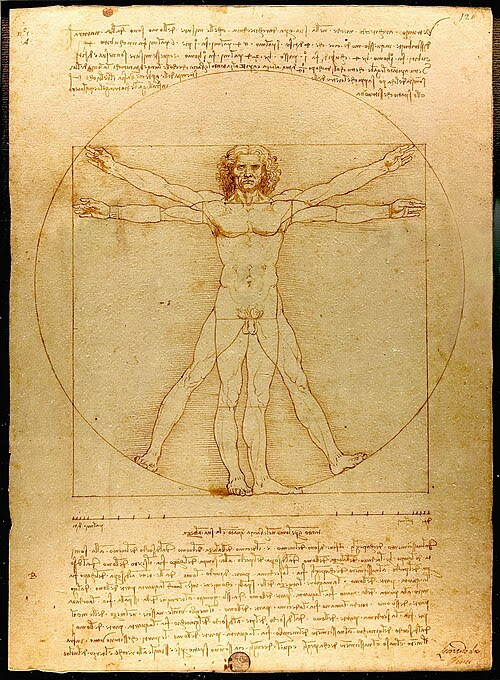
As a Yoga Teacher and RN, I appreciate the variety of movements and design of humans. How we move, how we balance and how similar or different we are with our sizes and abilities. For instance, my arms are not as long and proportionate as others or this artist's description. Reaching my toes is a stretch requiring props to assist me.
The Vetruvian Man. To me, it looked complicated and uninteresting in my early days working in Washington D.C. for an Internal Medicine doctor. I noticed this large piece of artwork with descriptions in another language. I may have seen it before but it never left a lasting impression.
Now I see it with the wonder the artist must have had about man's proportions. His interpretations describe the anatomy and measurements of an architect and engineer, Vitruvius who lived from c. 80 – c. 20 BCE in the Roman Republic. He thought it important enough to share with us on paper.
The artist, Leonardo Da Vinci. In 1490 he created this lasting marvel putting his pen to paper. Many find it familiar and interesting but often not connecting to its intention to show us the mathematics of man.
Description on top:
Vitruvius, the architect, says in his architectural work that the measurements of man are in nature distributed in this manner, that is 4 fingers make a palm, 4 palms make a foot, 6 palms make a cubit, 4 cubits make a man, 4 cubits make a footstep, 24 palms make a man and these measures are in his buildings. If you open your legs enough that your head is lowered by 1/14 of your height and raise your arms enough that your extended fingers touch the line of the top of your head, let you know that the center of the ends of the open limbs will be the navel, and the space between the legs will be an equilateral triangle
Description on bottom:
The length of the outspread arms is equal to the height of the man. From the hairline to the bottom of the chin is one-tenth of the height of the man. From below the chin to the top of the head is one-eighth of the height of the man. From above the chest to the top of the head is one-sixth of the height of the man. From above the chest to the hairline is one-seventh of the height of a man. From the chest to the head is a quarter of the height of the man. The maximum width of the shoulders contains a quarter of the man. From the elbow to the tip of the hand is a quarter of the height of a man; the distance from the elbow to the armpit is one-eighth of the height of the man; the length of the hand is one-tenth of the man. The virile member is at the half height of the man. The foot is one-seventh of the man. From below the foot to below the knee is a quarter of the man. From below the knee to the root of the member is a quarter of the man. The distances from the chin to the nose and the hairline and the eyebrows are equal to the ears and one-third of the face
If you're like me, you'll try to confirm some of these for your own body. Although not completely accurate, his observations are close to reality. The original is secured from the public and potential damage or theft at the Gallerie delle' Accademia in Venice, Italy to be offered only every 6 weeks for a short period of time. Maybe you'll get lucky to see this original masterpiece someday!
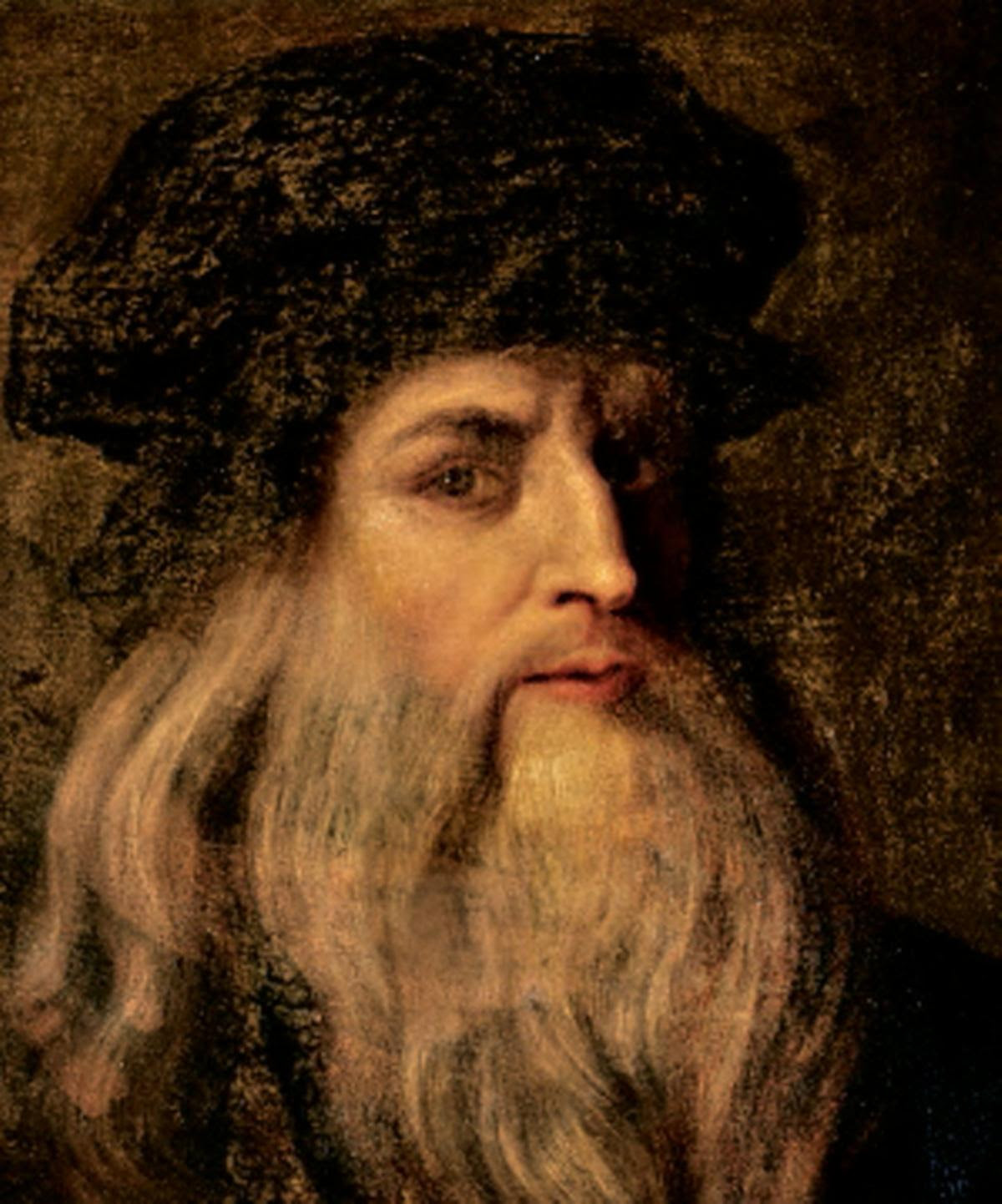
Leonardo Da Vinci
An instrumental Italian painter, draughtsman, engineer, scientist, theorist, sculptor, architect, and visionary. He was the Painter of the Mona Lisa and The Last Supper.
Da Vinci had no formal education, yet was able to study and create many scientific writings and artworks of anatomy, architecture, astronomy and more. Ahead of the times, he created designs for bicycles, helicopters, submarines for the future. Hence, the nickname, "Renaissance Man". Thank you Leonardo.
Respect for a Renaissance Man,
Gina
Fusion Owner, Registered Yoga Teacher, Reiki Master Teacher, R.N.